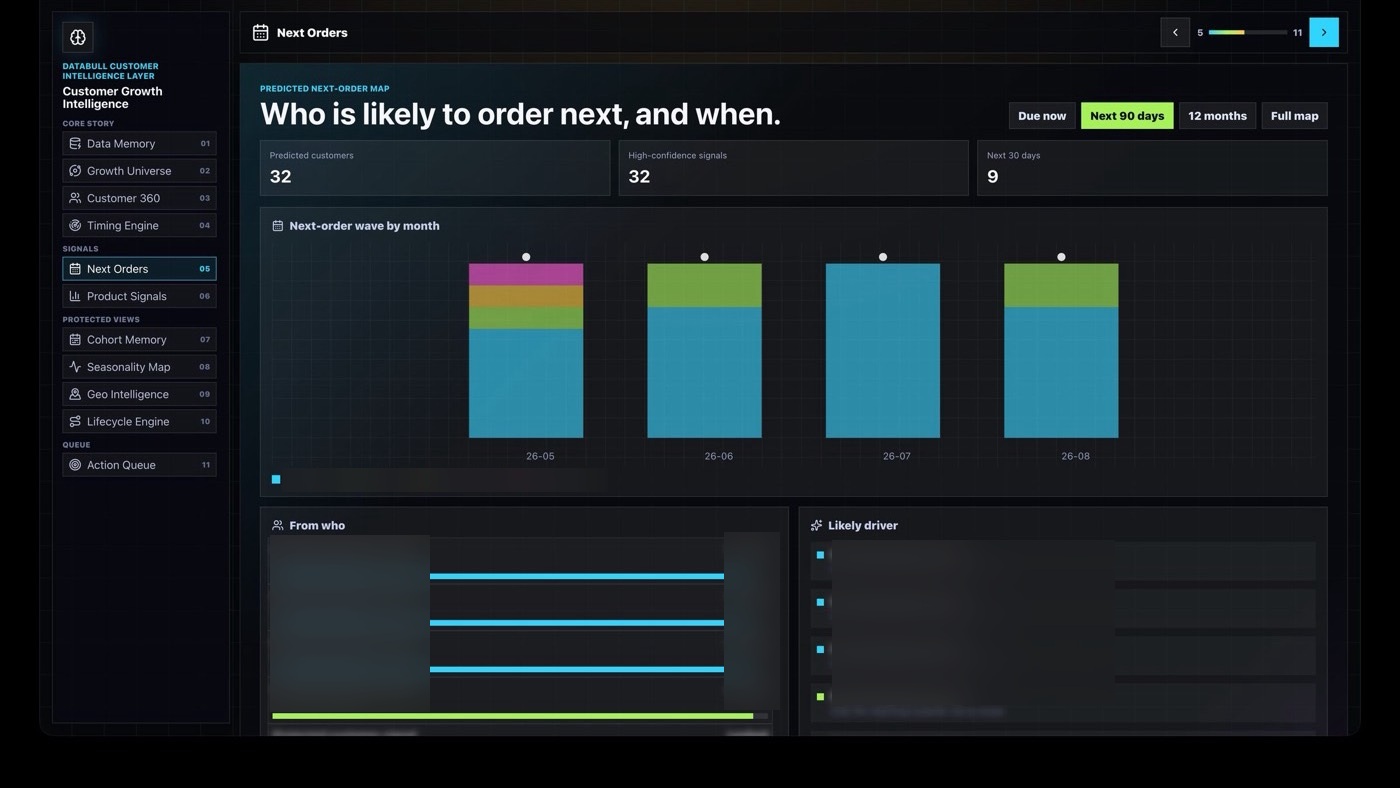
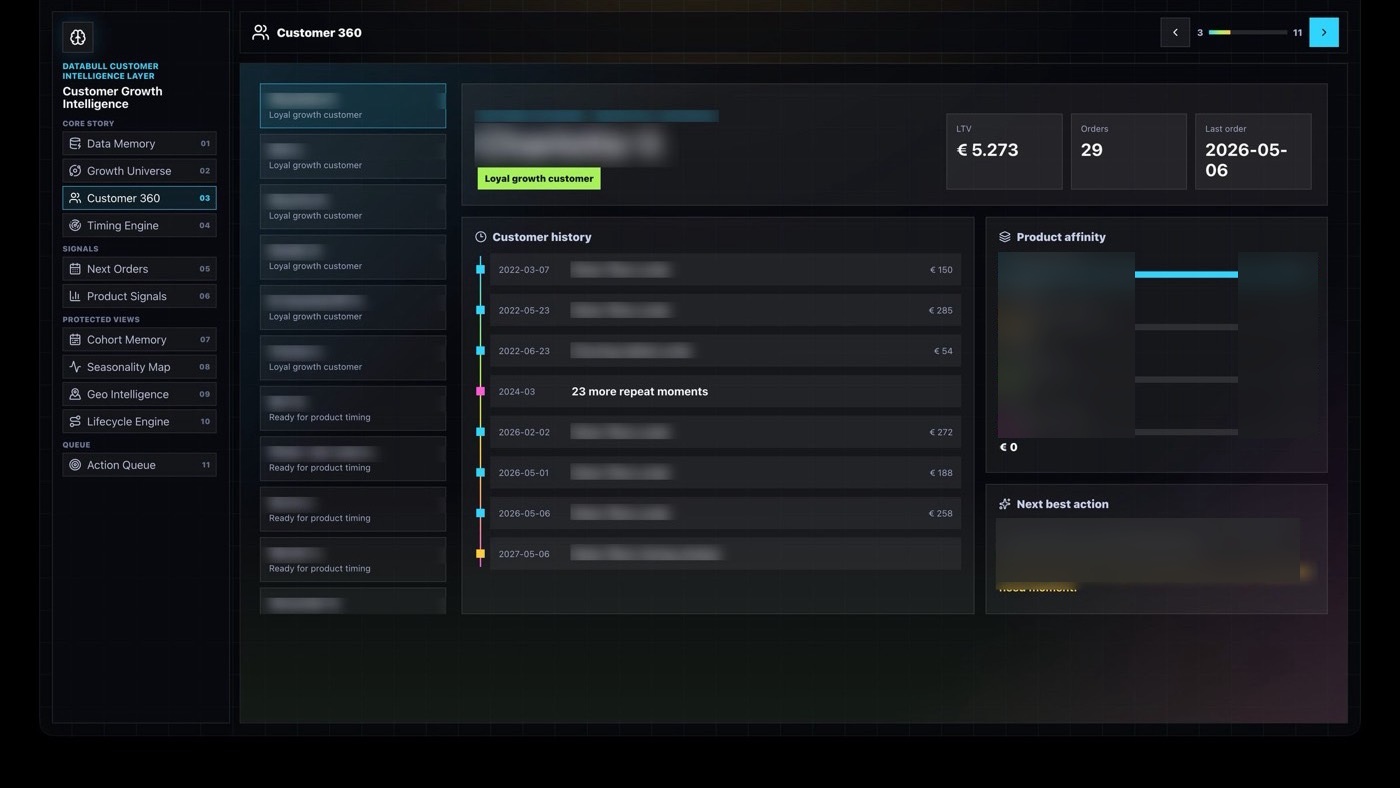
Butterstreet focuses on one layer: where your ecommerce platform, inventory, and marketing tools meet. Not your whole tech stack. Not another dashboard for every department. A practical layer that helps your team see who needs attention next, and what to do about it.
DataBull takes the data you already have and makes the next useful question visible before the spreadsheet afternoon starts.


Some clients need more than a dashboard. They need a private layer that connects customers, products, stock, margins, documents and rules, then makes that knowledge usable. Company Brain is the bigger architecture; local LLMs are one option when sensitive data must stay on a controlled stack.
Connect ecommerce data, customer intelligence, internal documents and operating rules into one controlled system your team can ask and trust.
Use local or private language models inside a governed analytics setup, without uploading sensitive exports into public AI tools.
Seeing the signal is useful. Acting while the moment is still open is where the value shows up. As an optional add-on, we connect DataBull signals to your marketing automation, Klaviyo, ActiveCampaign or your favorite tool, so reminders, win-backs and relevant cross-sells go out at the right time.
The reminder that arrives before the customer solves the problem somewhere else.
A message triggered by the customer’s own buying rhythm, not a generic inactive segment.
Offers based on real product affinity, not a guess dressed up as personalization.
Beyond DataBull, we build middleware and pipelines in the ecommerce and inventory layer. We start where the data breaks, what that costs, and which decision is blocked. Then we build the fix.
Ecommerce data engineering is the work of connecting order, product, customer, inventory, and marketing data so a store can make better next-step decisions. Butterstreet uses it to show which customer, product, or inventory signal needs attention next.
DataBull shows who is likely to reorder, who is drifting, which products move together, and where demand or inventory timing needs attention. That gives teams a customer intelligence view they can use before the moment passes.
DataBull signals can be passed into marketing automation tools like Klaviyo, ActiveCampaign, or your preferred platform. The goal is to send messages with a reason, timing, and customer context.
No. Butterstreet does not replace an entire ERP, CRM, finance, or WMS stack. It focuses on the ecommerce, inventory, and light marketing-tool layer where next actions are created.
No. The marketing automation add-on is optional. Many clients start with DataBull for insight, then connect signals to messages when action is the next step.